
People decide. Agents do.
A claim with attachments, a month-end close, a bid response. All of it has steps, waits, and a moment when someone has to put their name on it. That is where the process stops and the person confirms, asks for more, or rejects. It picks up at exactly that point: it doesn't start over, doesn't guess, doesn't go on without you.
And one rule changes everything: on the desktop and in the add-ins, the actor is the person. The agent lends brains, toolbox and judgement; permissions, spend and policy stay those of whoever is sitting at the computer.
It works both ways. An agent can also leave you an assignment —“I'm missing the department's signature”— and you see it in your inbox, with its date, like any task of yours.
14 playbooks in production, each with its human step measured on 2026-09-04
5.4 : 1 is the input-to-useful-output ratio across playbook missions measured on 2026-08-24
- Agent's work Task An agent with a trade does its share of the work.
- Step enabled Decision The process branches on what it found.
- Agent selected Parallel Two agents work at once, each on its own.
- Human intervention resolved Human intervention A person confirms, asks for more, or rejects. The process waits. ConfirmRequest informationReject
- Tool executed Handover Another specialist takes over, and its share is charged under its name.
- Mission completed Close The deliverable goes out with its full trail. Signed deliverable
A coordinated team of agents, with the person at the critical points
Every agent has a role, a toolbox and a face. One reads case files, another squares the numbers, another writes on your brand template. Above them all is one that carries no tools: it plans and delegates. When a job needs four roles, it calls them in turn, announces each handover, and each one's share stays under its own name.
Look at a face and you'll see its sheet, the same one the operator sees in the Agent Center. Ten of the sixteen are free, for the roles your company defines.
434 skills available to build a toolbox from measured on 2026-09-04
57 agents in production, each with its role and its face measured on 2026-09-04
















Watch it happen, screen by screen
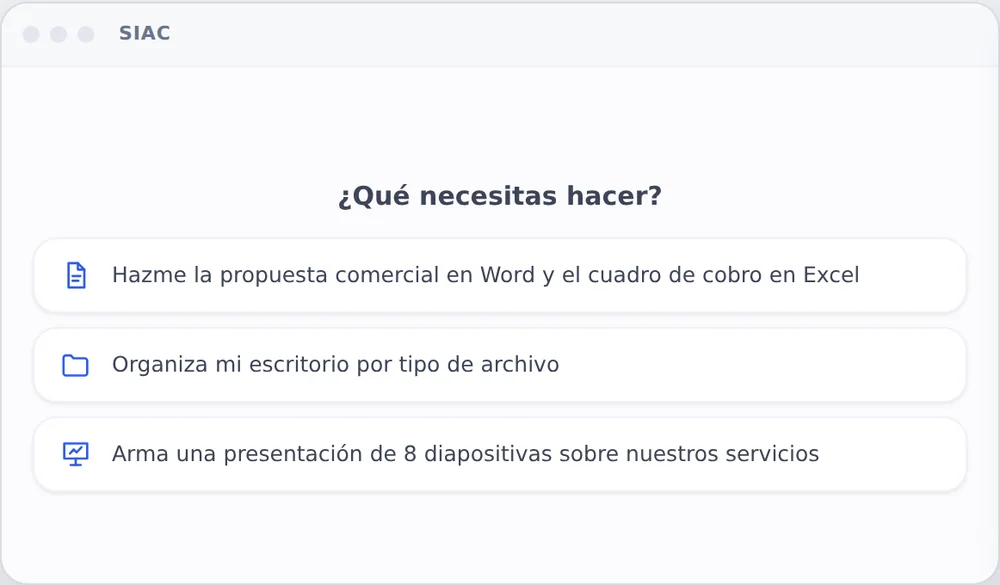
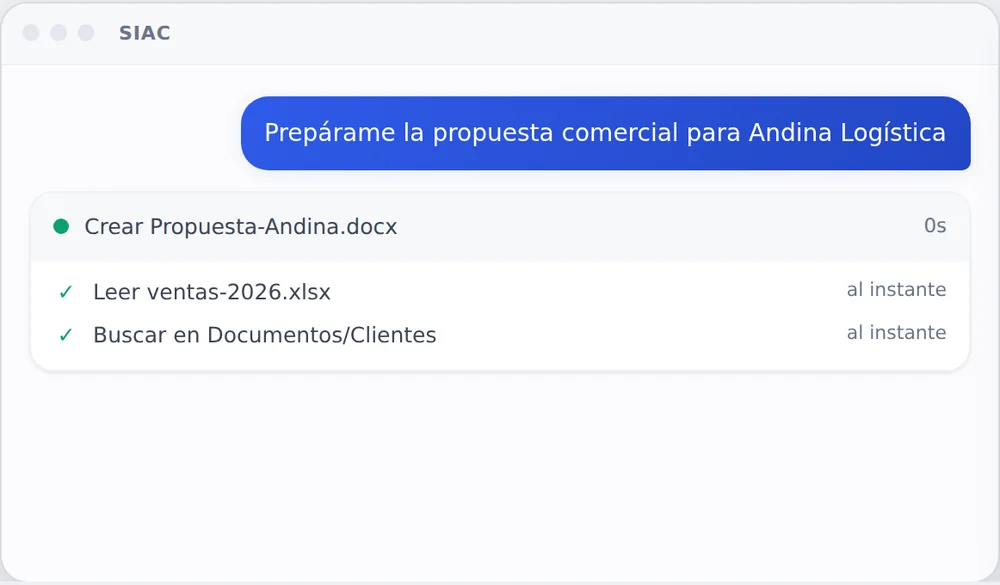
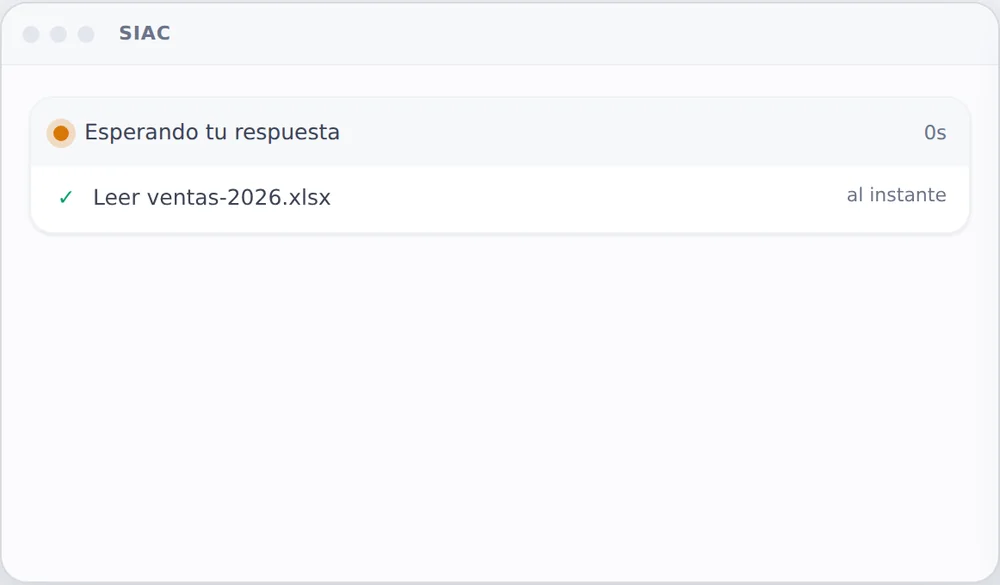
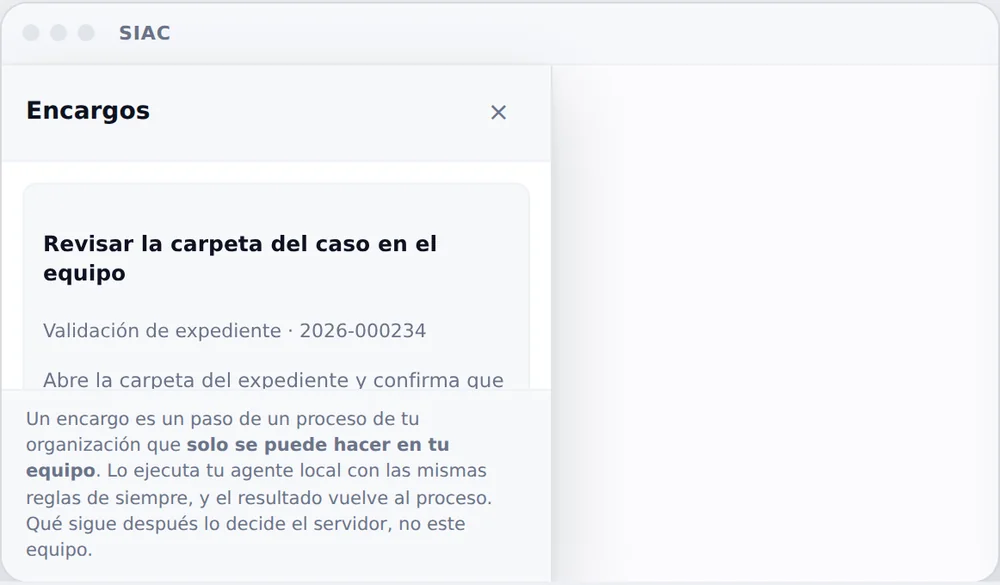
Real product screens: desktop, phone and tablet.
What people ask before deciding
Can the agent do something without a person approving it?
Anything that leaves the device or touches data is approved in the moment, with what is about to happen said in words. A playbook stops where the human step was drawn and doesn't go on without the person.
Who is responsible for what an agent does on my computer?
The person sitting there. On the desktop and in the add-ins the actor is the person: their permissions, their spend, their policy.
Does one agent do everything?
No. Every agent has a trade and a toolbox; one with no tools plans and delegates, and every handover stays under the name of whoever did it.
What if the agent needs something from me?
It leaves you an assignment in your inbox, with its date, like any task of yours.
The other verticals
- ConnectedAn agent is worth what it can touch
- One platformOne platform: you govern, you measure, and you depend on no model and no cloud
- InfrastructureInfrastructure you deploy and govern
- The MeshThe SIAC Mesh: your servers, your agents and your AI in one governed network
- FinOpsFinOps: every token has an owner
- No capsGrow without asking the product for permission
- Your AIAn AI that knows you, on a team your company approves
- The studiosWhere AI is designed, tested and published
- ChannelsInside, where your people work. Outside, where your customers are.
Tell us a use case. We tell you how it's tackled.
SIAC comes in through the organization, not through personal accounts. If you already work with us, your console is one click away. If not, let's start with the process that hurts most.